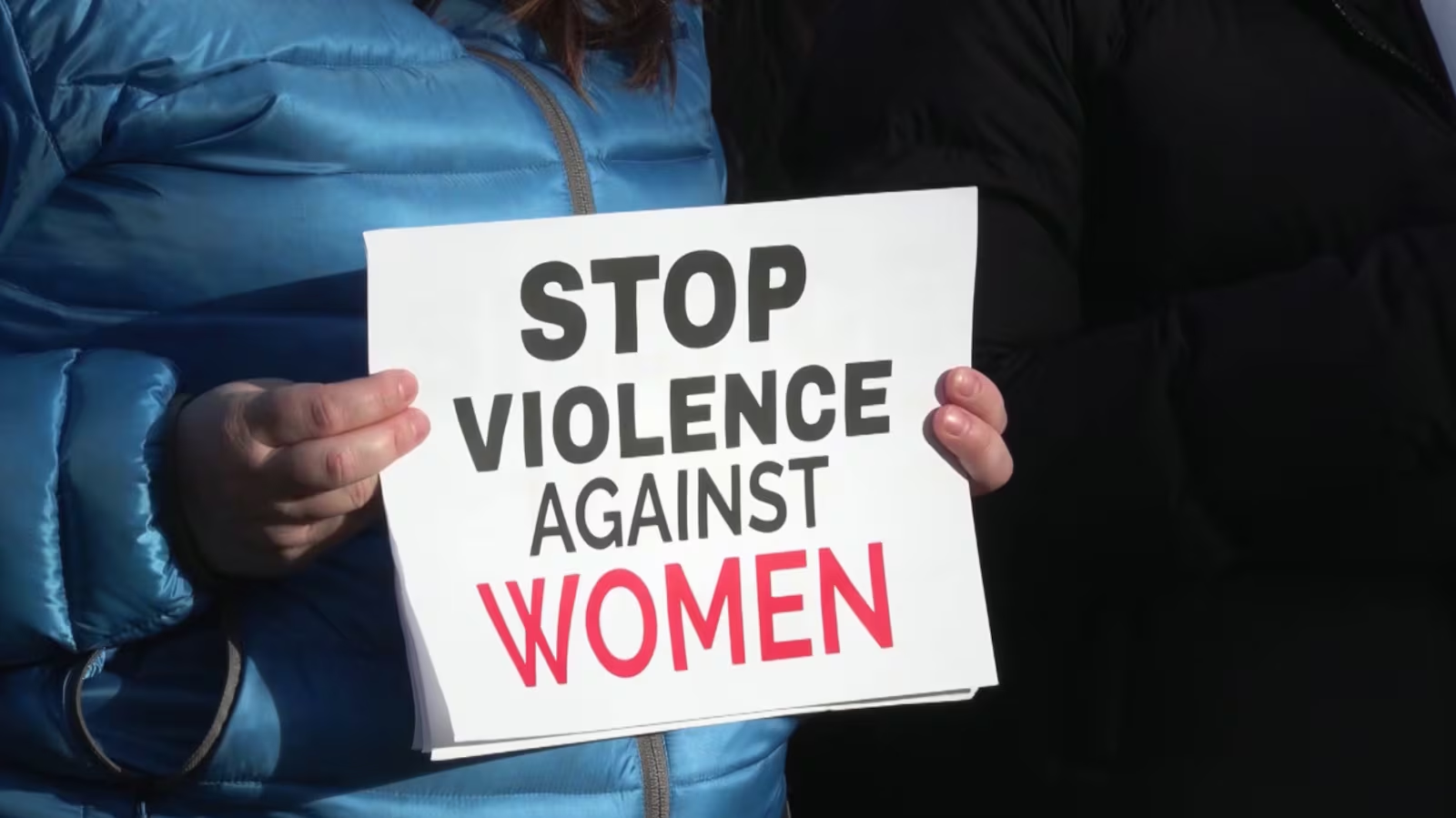
Organizations that respond to intimate-partner violence say they’re feeling a renewed sense of hope that changes will be made to B.C.’s justice system to better protect women.
Their optimism stems from a recent meeting between service providers, police leaders and provincial politicians, including the attorney general.
“It was the first meeting of its kind that’s happened in a very long time, if there even is precedent for it,” said Victoria Women’s Transition House executive director Bahar Dehnadi.
The meeting was born out of tragedy, following the death of Laura Gover, a respected business instructor and mother of two. The Saanich woman’s ex-husband is charged with second-degree murder.
Shortly after Gover’s death in January, a dozen anti-violence organizations on Vancouver Island formed a coalition to advocate for safety improvements.
“I’m feeling more hopeful now than I was on the day I learned that Laura passed away,” said coalition member Candace Stretch, a second-stage housing manager at the Cridge Centre for the Family.
Stretch, Dehnadi and their fellow coalition members are pushing for stronger enforcement of protection orders, commonly referred to as restraining orders.
Dehnadi said front-line police officers regularly fail to understand they can enforce restraining orders made in family law court—not just those made in criminal court.
“Time and time again, we’ve been told they need a separate enforcement clause for that to happen, but we’ve received confirmation (from the province) that is not the case,” she said.
The coalition is also asking the province to strengthen the risk assessment system for domestic violence cases.
Police, lawyers and support workers can conduct risk assessments, asking survivors a series of questions to understand the potential for harm, including serious injury or death.
Stretch said there isn’t a standardized assessment tool and the findings aren’t often shared between police, service providers and the courts.
The Victoria Police Department said its assessments are internal, but are shared with Crown prosecutors in cases that result in charge recommendations.
“Any time you look at where things go wrong for women fleeing intimate-partner violence, it’s almost always: Somebody had information that somebody else didn’t know,” Stretch said.“So sharing information is really important, and we have to figure out ways to do that safely.”
Stretch is encouraging people to write to their MLAs to push for legislative changes to better protect women from abusers.
If you or someone you know is experiencing intimate-partner violence, VictimLink B.C. can connect you with local supports. You can call or text 1-800-563-0808.